


Do You Really Own Digital Movies? What Your Purchase Buys

Buying a digital movie in Germany usually gives you access under a storefront’s licence terms, not a transferable copy you control like a disc. So, whether you really own digital movies depends on what you mean by “own”: you may keep access to a title, but the platform’s terms and content rights can affect its availability.
It makes sense that buying a movie feels different from subscribing to a streaming service. You’ve paid for a specific film and expect it to stay in your library. But “buy” does not always mean permanent, unrestricted access. The details depend on the storefront and its terms.
This guide explains how digital purchases differ from subscriptions, what a limited licence can mean, and how storefront terms affect continued access. It also covers DRM-free files: they may offer more flexibility, but that does not determine the full rights attached to a purchase.
Table of Contents
Differences between purchased downloads and streaming subscriptions
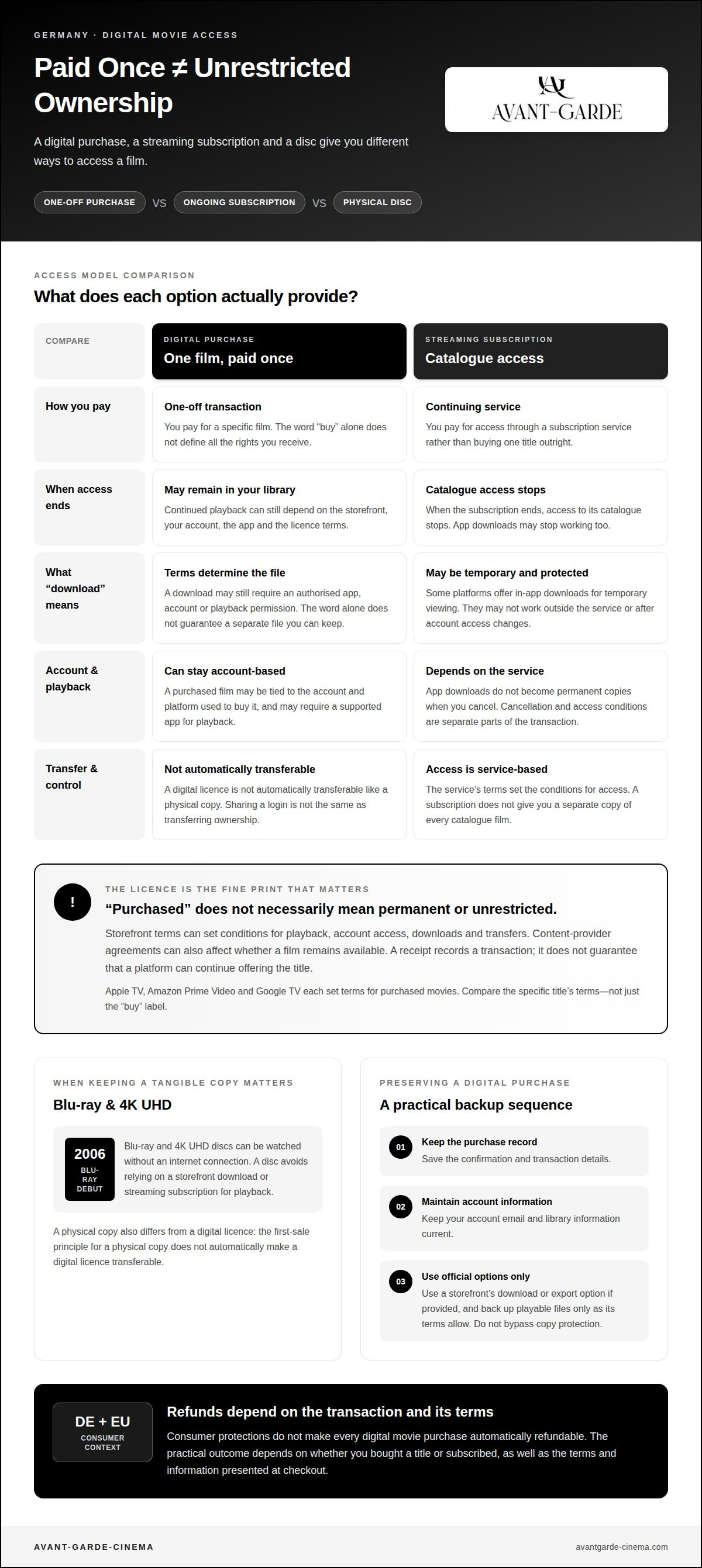
A digital purchase and a streaming subscription provide access in different ways. In Germany, the key distinction is whether you pay for one title or for access through an ongoing subscription.
Downloads and Subscription Access
A digital purchase is a one-off transaction for a specific film, while streaming access comes through a continuing service. When a subscription ends, access to its catalogue stops, and app downloads may stop working too. A purchased title may remain in your library, but playback can still depend on the storefront, your account, the app, and the licence terms.
Downloading a film for a train journey, for example, does not necessarily give you a separate video file to keep. Some platforms offer temporary, protected downloads inside their apps; others provide files under different terms. The word “download” alone does not tell you whether a movie works outside the service or remains playable if your account access changes.
In Germany and the EU, consumer protections do not make every digital movie purchase automatically refundable. The practical outcome depends on whether you bought a title or subscribed, as well as the terms and information presented at checkout.
Cancelling a subscription usually ends future access under the service’s terms; it does not turn app downloads into permanent copies. With a one-off purchase, access depends on the title’s purchase terms, and account or platform restrictions may still affect playback. Read cancellation and access conditions as separate parts of the transaction.
Backing Up Purchased Movies
Backing up means preserving a permitted copy or the records you need to retrieve a purchased film. A receipt and account record can help document what you bought, but an app-only download may not work as an independent backup.
Use this sequence: save the purchase confirmation and transaction details, keep your account email and library information current, then use any official download or export option the storefront provides. If the platform supplies a playable file, back it up only as its terms allow. Do not bypass copy protection to make another copy.
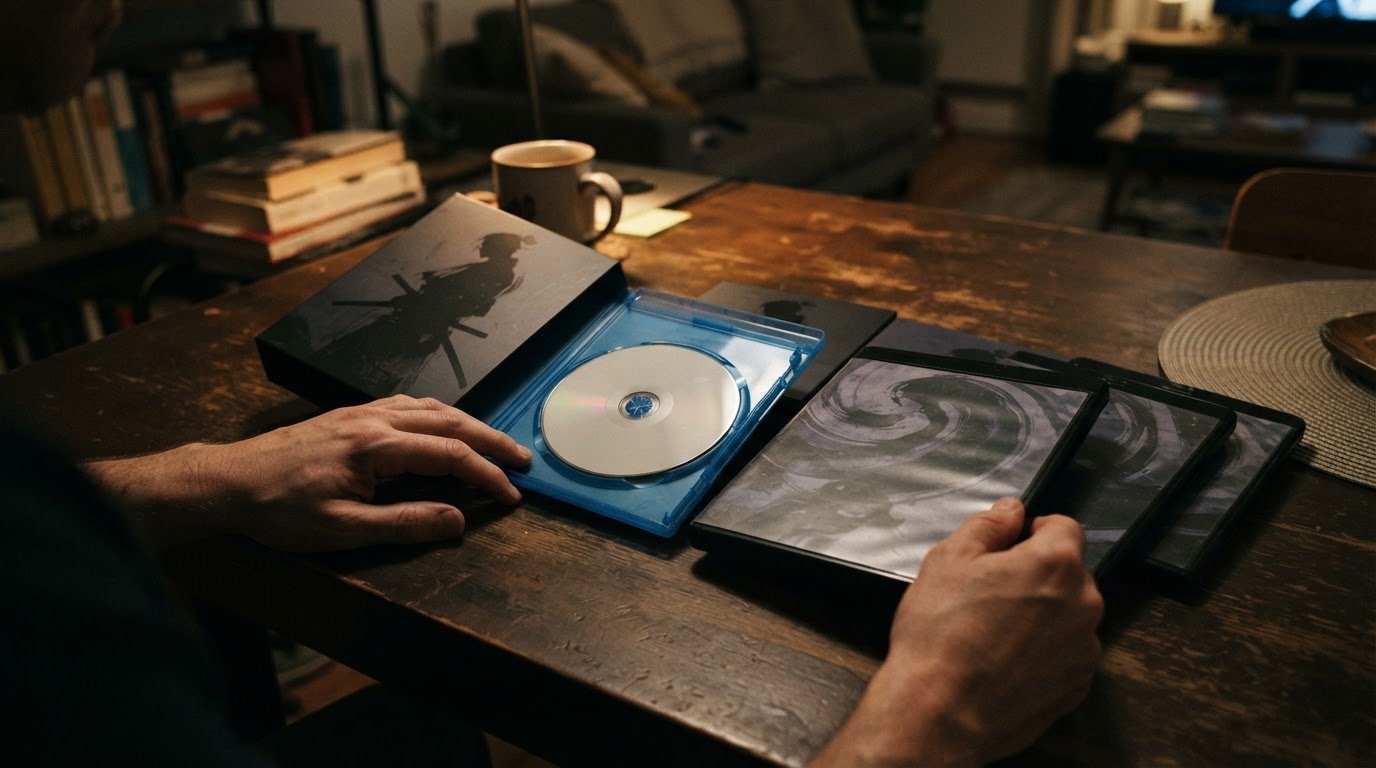
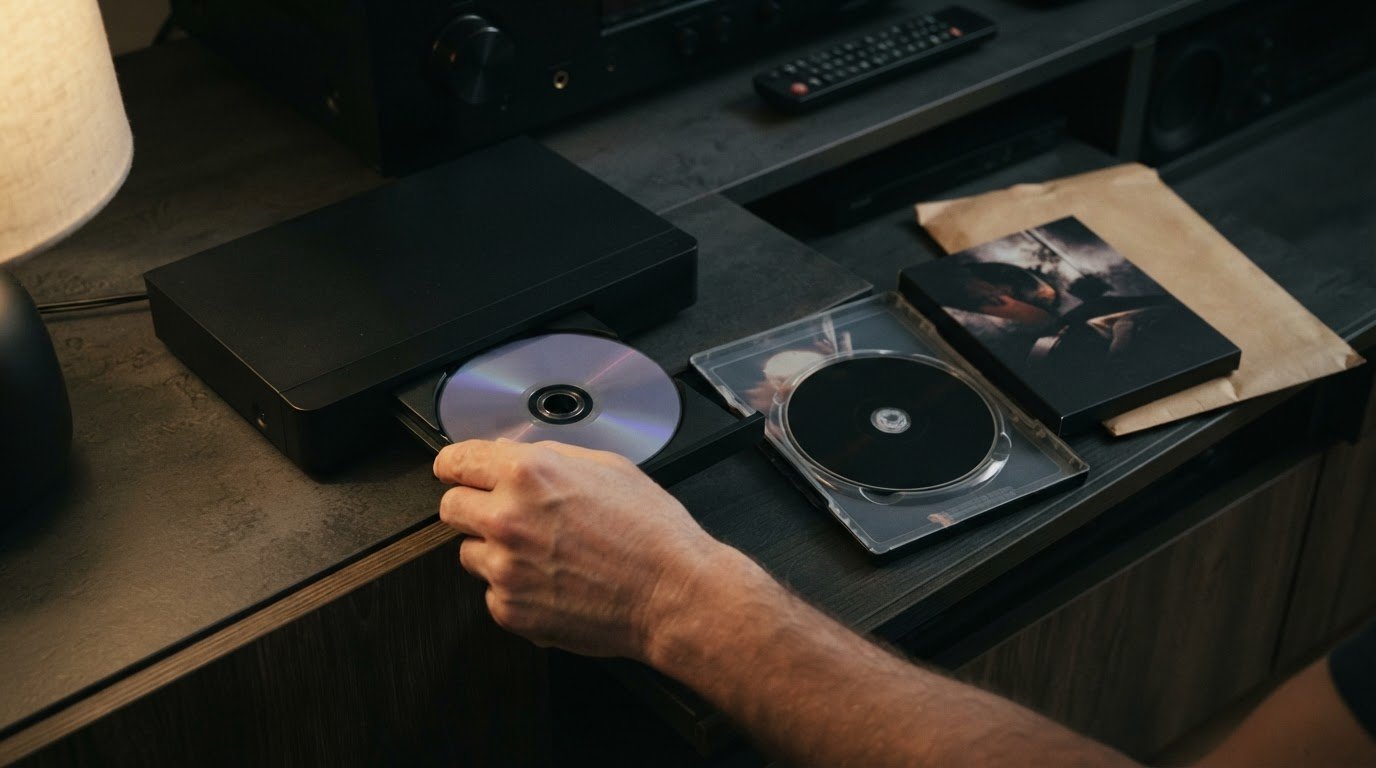
Blu-ray discs debuted in 2006, and Blu-ray and 4K UHD discs can be watched without an internet connection. For a movie you want in a tangible collection, a disc avoids relying on a storefront download or streaming subscription for playback.
Digital purchases as limited licenses rather than ownership
A digital “buy” button can refer to a licence to access a film, rather than ownership of a transferable file. This distinction matters because storefront terms can define how long access lasts and which uses are permitted.
Licenses and Purchase Agreements
A licence agreement sets the conditions for using a digital movie after purchase. Publishers and technology companies have had leeway to use licence agreements to limit users’ rights for more than two decades. The terms may cover playback, account access, downloads, and transfers. For example, a film in your library might remain tied to the account and platform used to buy it.
In Germany, the rights a digital movie purchase gives you depend on the transaction’s terms; “purchase” alone does not mean unrestricted ownership. The first-sale doctrine allows the owner of a physical copy to lend, donate, or resell it after its first sale. That principle does not automatically make a digital licence transferable.
Rights Attached to a Purchase
The rights attached to a digital purchase are the permissions and access set out in its agreement. Buying a title does not necessarily give you the same control as owning a physical copy. A storefront may require an account or supported app for playback, while its terms determine whether access can be moved to another person or device.
If a film is available only through your account library, for instance, sharing your login is not the same as transferring ownership. Licence terms may also cover copying or playback on other devices. Read the conditions alongside the word “buy” to understand what the transaction permits.
The word “purchase” does not guarantee a permanent download. Whether you can keep a playable file depends on the storefront’s download options and licence terms. A file stored on your device may still require an authorised app, account, or playback permission, so keeping it does not necessarily preserve access indefinitely.
Digital storefront terms and content-provider licensing restrictions
Storefront terms and film-rights agreements can affect where and how a purchased movie plays. For viewers in Germany, access may depend on both the platform and the content provider.
Removal of Purchased Content
Removal means that a title disappears from a storefront library or can no longer be played. A purchase may rely on continued platform access, not just a transaction record. If a content provider’s agreement with a storefront changes, the film may be affected. Lawsuits could take years and millions of dollars, so litigation is not a practical guarantee of continued access.
Keep the distinction clear: a receipt records a purchase, but it does not ensure that a platform can continue offering the film. Apple TV, Amazon Prime Video, or Google TV may list a title as purchased while access remains subject to applicable terms and content rights.
How Platforms Define Ownership
Apple TV, Amazon Prime Video, and Google TV each set terms for accessing purchased movies through their services. Buying a film from any of them does not mean acquiring its copyright or an unrestricted copy. The relevant terms explain what library access and playback the transaction provides, so “ownership” should not be taken to mean the same thing as owning a disc.
Compare the specific purchase terms, not just the “buy” label. An account-based library, for example, differs from a transferable physical copy. Agreements between the service and content provider can affect continued access; the platform name alone does not determine the conditions for every title.
Geographic restrictions add another layer. A film available in Germany may not appear in the same catalogue when you travel elsewhere because regional rights can vary. Streaming availability can therefore depend on your location as well as the storefront and account, even when the movie remains listed in your library.
For a collection meant to remain playable independently of a storefront, physical copies offer a different kind of control. Blu-ray and 4K UHD discs can be watched without an internet connection and do not disappear from their owner’s collection. That makes physical media a practical alternative when continued digital access is the concern.
DRM-free digital stores
A DRM-free movie file has no digital rights management lock restricting playback through authorised software. This can make it easier to move the file between compatible devices or preserve a personal copy. But DRM-free describes the file’s technical restrictions, not the full legal rights granted by a purchase. Copyright and the storefront’s licence terms still matter.
A downloadable video file without DRM, for example, may play in compatible software without repeatedly checking a storefront account. That flexibility can reduce dependence on one app. It does not guarantee that every device supports the format, that the store will host the file indefinitely, or that you can share or resell it.
Before buying, look for clear information on three points: whether the movie is explicitly DRM-free, which file format is supplied, and how long downloads remain available. Then distinguish the file from the purchase agreement. A store might provide an unrestricted file while its terms still limit how you may use or distribute the film.
DRM status: Confirm the listing identifies the movie as DRM-free, rather than assuming every download is unrestricted.
File format: Check the stated format against the playback software and devices you use.
Access terms: Understand whether the store provides a downloadable file or app-based access.
These details clarify what a DRM-free purchase changes: it can remove a technical playback lock, but it does not automatically transfer copyright or guarantee ongoing storefront support. A downloadable file may be easier to back up than a protected app download, provided you follow the applicable terms. For archiving, keep the original file with the purchase record.
If you’d rather keep a movie in a physical collection, explore collectible movie editions as an alternative to storefront-dependent access.
Avant-Garde-Cinema
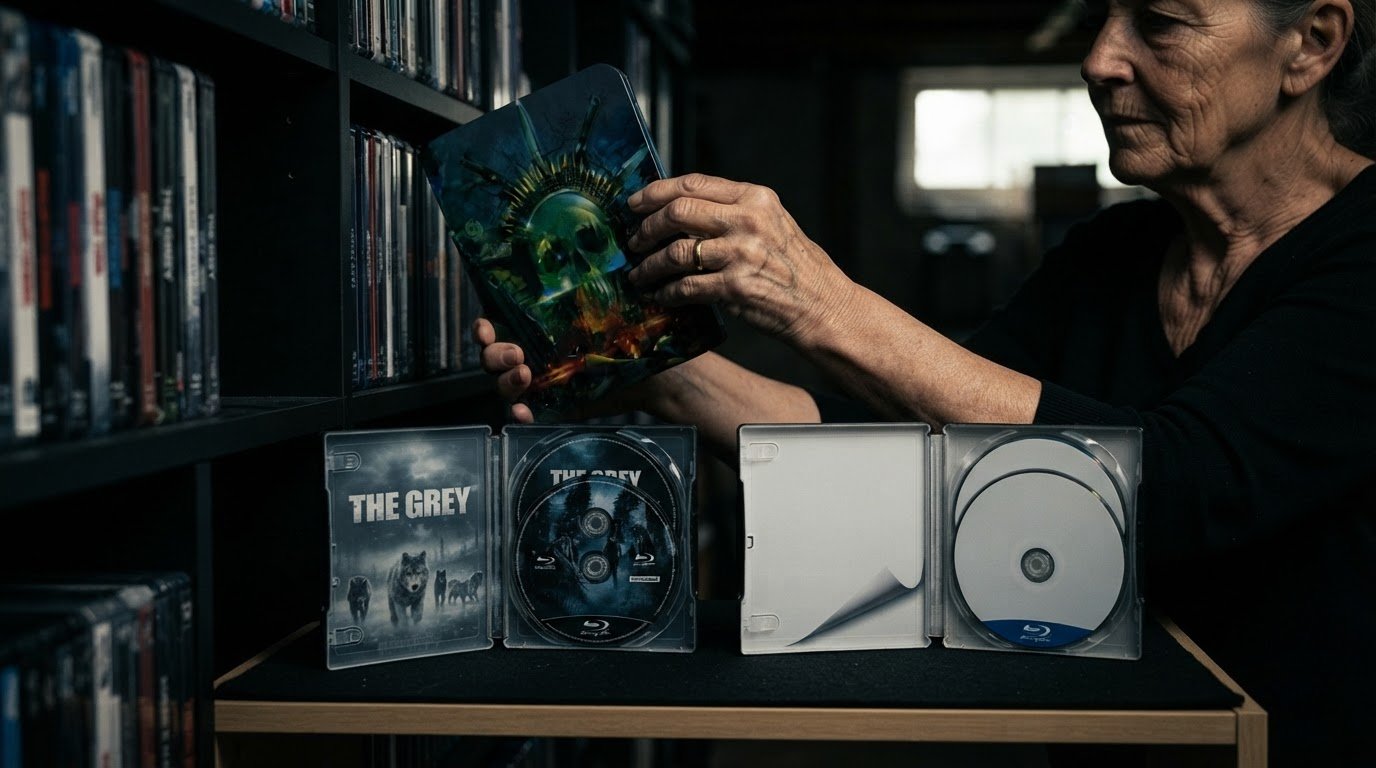
Avant-Garde-Cinema offers a tangible alternative for collectors who want movie editions on their shelves, rather than access tied solely to a digital storefront. Its 4K UHD and Blu-ray range includes Limited Editions, Limited Collector’s Editions, Limited Slipcover Editions, and Steelbooks. These physical releases suit viewers who value a disc-based collection alongside artwork and edition-specific packaging.
A disc does not answer every question about digital licences, but it gives your collection a physical format to keep and play with compatible equipment. If that distinction matters for a favourite film, browse the available editions and choose the format and presentation that suit your collection.
Contact Avant-Garde-Cinema to explore physical movie editions for your collection.
Choose the format that fits your collection
Choose your next movie based on how you want to revisit it. A film you love returning to may deserve a place in your collection, while casual viewing can remain flexible. Thinking about your habits first turns the question of whether you really own digital movies into a practical choice about the experience and collection you want.
For collectors, a favourite title can mean more than a play button. Artwork, packaging, and the satisfaction of choosing a specific edition can make movie collecting a hobby in its own right—a sentiment familiar to anyone who values tangible assets, whether filling a shelf with limited physical releases or exploring rare ownership opportunities with Cask Club. Choose films that matter to you, then build a shelf that feels personal and considered, ready for your next movie night.
If you’d like to explore physical movie editions for your collection, contact Avant-Garde-Cinema. Your next great addition can start with a film you’re excited to revisit.
Frequently Asked Questions
So what does this all really mean?
Asking “Do you really own digital movies?” means asking what your purchase lets you keep and do. A digital transaction may provide account-based access rather than an independent file. For a film you revisit often, decide whether platform-based playback suits you or whether a physical edition fits your collection better. Match the format to how you want to watch.
When you buy a digital movie, do you own it or only a license?
The question “Do you really own digital movies?” has a practical answer: a purchase generally grants access under the storefront’s terms, not ownership of the film’s copyright. The word “buy” does not tell you whether you can move the title to another account or play it without the platform. A movie in your library, for example, may still require the service’s app or an authorised account.
Can a digital movie be removed from your library after purchase?
Access may be affected if a storefront loses the rights to offer a film or changes its support for purchased titles. A saved receipt documents the transaction, but it is not a playable copy. If a film matters to your collection, consider how much you rely on one platform to keep it accessible and whether another format better suits your viewing habits.
What happens to purchased movies if a streaming service shuts down?
Your access depends on the service’s shutdown arrangements and the terms governing your purchase. A service might offer a way to retrieve, transfer, or continue accessing titles, but you should not assume that it will. If playback requires the service’s app, losing access to that app could matter as much as losing the library listing. Keep purchase records with your account details.
Can you transfer, resell, or lend digital movie purchases in Germany?
Do not assume you can transfer, resell, or lend a digital purchase as you would a disc. The first-sale principle applies to a physical copy, while a digital transaction may be governed by account and licence terms. Sharing your login with a friend, for example, is not necessarily a transfer of the movie. The specific agreement sets the permissions attached to your purchase.
How do digital movie purchases differ from streaming subscriptions and physical discs?
A purchase is tied to a specific title, a subscription provides access through an ongoing service, and a disc gives you a physical copy. Cancelling a subscription ends access under its terms, while a Blu-ray can be played without an internet connection. Choose based on whether you value a streaming catalogue, access to one digital title, or a tangible movie collection.
Comments